animaanima

Nervous System informed Facilitation

Nervous system-informed facilitation combines an understanding of the nervous system - a shared biological system that shapes how we interpret the world and respond to it - with an inclusive approach to leadership. Facilitation focuses on guiding groups collectively rather than directing them, creating conditions for meaningful dialogue and collaboration. By integrating awareness of nervous system states, this approach helps people feel safe, stay present, and work together more effectively, even in challenging situations.

RAW Attitude

RAW Attitude (Regulated, Aware, Warm) is about leading groups in a way that feels human, inclusive, and grounded. By staying regulated, facilitators create a sense of safety and clarity. Through awareness, they notice what is happening within themselves and in the group. And with warmth, they bring compassion and openness that invites trust and meaningful collaboration. This attitude helps groups navigate complexity and create outcomes that truly matter.

Why this book matters now

In a world of multiple crises—climate change, rising authoritarianism, stress, and uncertainty—how do we create spaces where people can truly collaborate? How do we move beyond quick fixes to address the deeper patterns that keep us stuck? “The success of an intervention depends on the interior condition of the intervener.” - Bill O’Brien. This guidebook emerges from a simple but profound recognition: How we interact with the world, the work we do, and every intervention we design is highly influenced by the inner state we are operating from. Meaningful collaboration happens through the nervous systems. Understanding how stress, overwhelm, and resistance show up in us as facilitators, but also in the people we work with can enable us to facilitate spaces that foster the creativity, flexibility, and innovation our world desperately needs.

What you might take away from it:

  • How to become more aware of your own unconscious patterns and shift from reactivity to response-ability
  • Ways to "read the room" more skillfully by sensing others' nervous system states and responding with greater empathy
  • How to work with difficult emotions and underlying conflicts that usually get avoided or brushed aside
  • Why groups get stuck and how to enable flow and transformation by addressing deeper dynamics, not just content
  • Concrete tools to create genuine safety where participants can be more present, creative, and willing to share diverse perspectives

What’s inside the book?

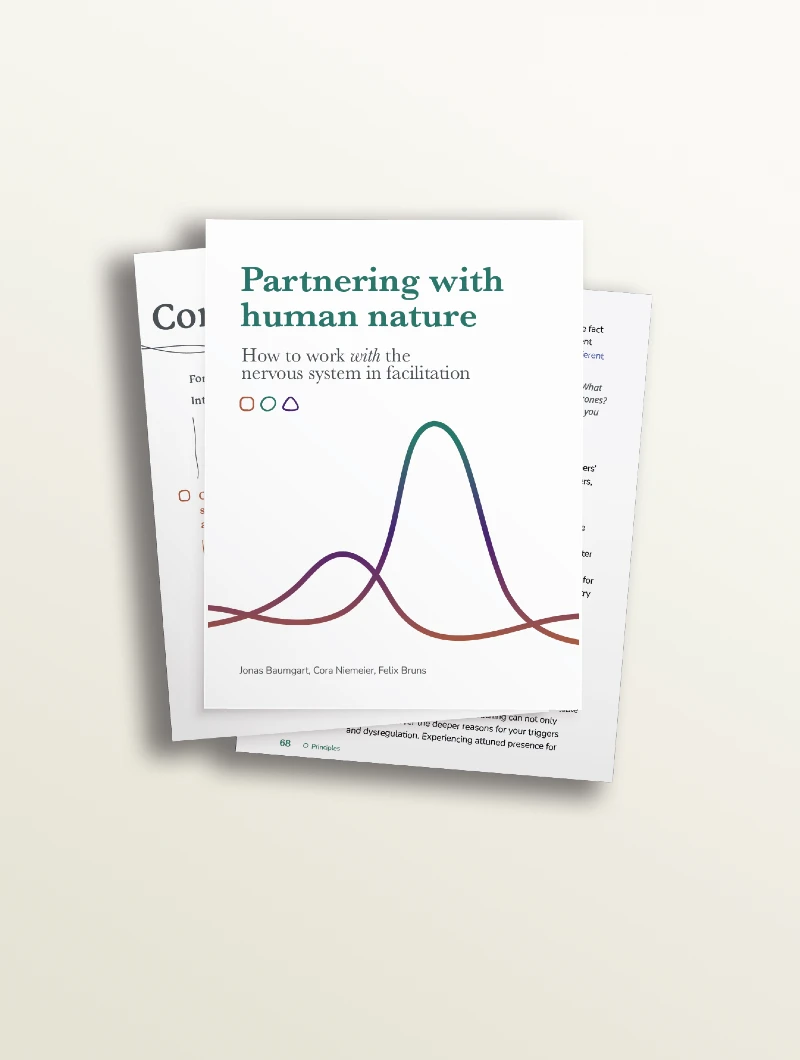
The first chapter lays the foundation of nervous system informed facilitation (NIF), introducing key concepts and the mindset behind this approach. The second chapter offers guiding principles based on insights from experienced practitioners. The third chapter is a practical toolbox, filled with activities and examples you can apply in workshops—and in your daily life.

Where does the content for this book come from?

This guidebook draws on insights from over 30 practitioners—therapists, consultants, educators, and more—who shared their experiences through interviews and feedback. It’s rooted in the authors Master’s research and influenced by frameworks like Polyvagal Theory, Somatic Experiencing, NARM, and the work of Thomas Hübl. Shaped by conversations, experiments, and reflection, it bridges nervous system science with the practice of facilitation.

Is there a printed version / ebook version?

Soon we will be launching a crowdfunding campaign to fund a printed edition. As part of the campaign, we will also launch an ebook-version of the guidebook. Sign up to our newsletter to stay up to date about it!

What does Open Source /creative commons mean?

Tbd: Info about what you can do and can’t do with it. We didn’t invent this content and want it to spread etc. You can adapt it, but please reference us. something like this

The Guidebook

Get The RAW Attitude Guidebook

We believe this work should be accessible to everyone, which is why we’re releasing the digital version of this guidebook under an open license with a pay-what-you-can model.
Over the past years, we’ve spent more than 2,500 hours creating this guidebook. In a time of seemingly endless information and freely available content—often generated by AI—the value of sustained, relational, and embodied work can easily be overlooked. We see this guidebook as our contribution to the systemic and cultural changes we want to support in the world.
We would love to continue this work, and every small or large contribution helps make that possible. You’re invited to choose for yourself how much this guidebook is worth to you and what you can afford. You can also download it for free.

Choose amount:

Our Story

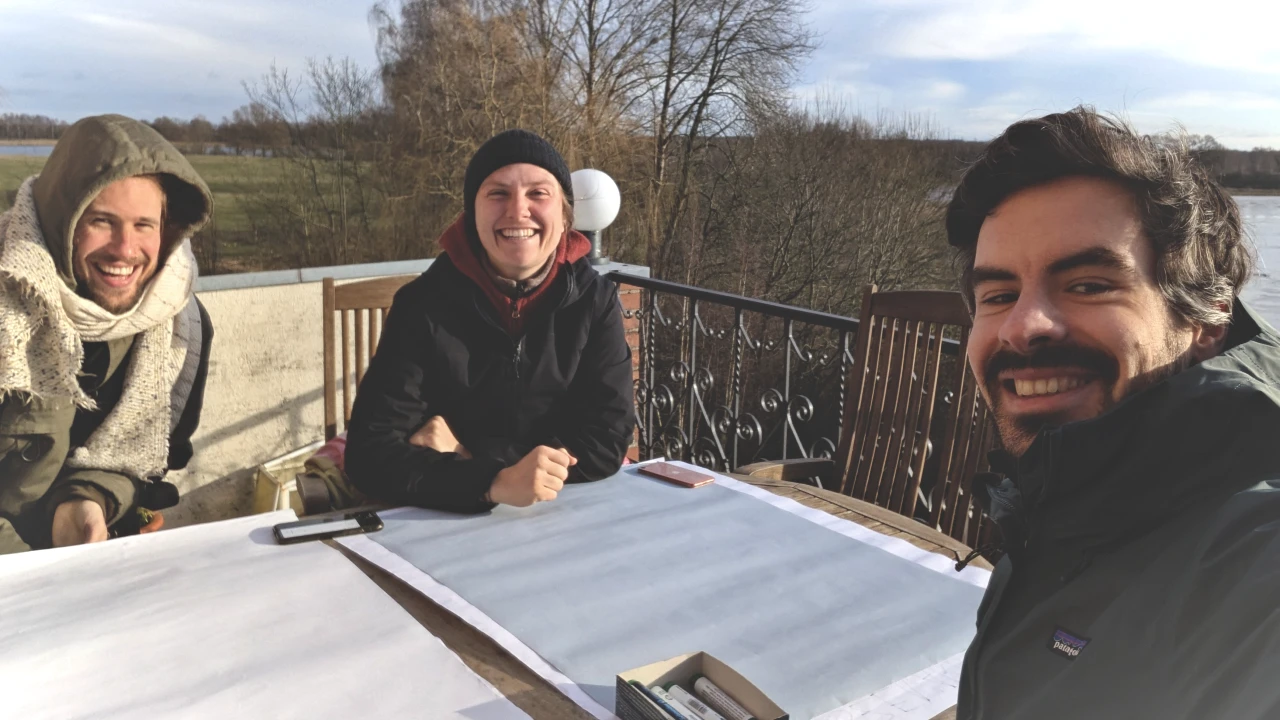
It all began with a master thesis at MSLS. That initial spark led to four years of collaboration, exploring not just nervous-system informed facilitation, but also how caring for the nervous system can foster more regenerative ways of working together, and ultimately, of moving through life in a more regenerative way. Throughout this journey, we've made a conscious effort to embody what we write about, and tending to our bodies and nervous systems has become central to how we work. Quite often, we managed to go through intense, day-long writing sprints, not just with tasks completed, but feeling grounded and more connected - to ourselves and each other. Of course we’re only human, and other times, things didn’t go so smoothly. But we are continuously learning and continuing to deepen our understanding of what it means to work in ways that are truly regenerative.
Jonas was born in Dresden, Germany in 1990, shortly after the country was reunited. His passion for leadership, the nervous system, and trauma comes partially from his own journey of self discovery and healing, and partially from a deep curiosity about and love for people, relationships and group dynamics. Ever since being part of an alternative festival collective, he has been passionate about the magic that can happen when people come together in mutual support and co-creation towards a shared goal. Currently, he works as a part-time project manager for Mehr Demokratie e.V. creating spaces for dialogue beyond polarization, and as a freelance facilitator.
Cora Niemeier's journey began with an education as a bodyworker, a degree in psychology in the Netherlands, followed by an M.Sc. in Strategic Leadership for Sustainability in Sweden. Cora combines her knowledge and passion for environmental psychology, organizational development, and regenerative (agri)culture with hands in the soil approaches to promote systemic change. With her KaosPilot training in Systemic Activism and Participatory Leadership, she works as a freelancer for regenerative (agri) culture. Next to this, she works part time with Humanistic Management Practices as an educator for inner work and economy for the common good. Cora is involved in projects ranging from solidarity gardening to the Art of Hosting, and is committed to positive change at all levels. Her holistic approach and multi-perspective thinking enriches every initiative, including this handbook.
Felix works as a facilitator, host of participatory processes, consultant for organizational development and self organisation, and is training to become a facilitator for collective trauma integration processes. After his bachelors he took a year to explore more life-serving ways of being human and dove into cultural transformation, nervous system- and trauma-informed facilitation, living in community, commoning, systems thinking and somatics. During his Master's in Strategic Leadership towards Sustainability, he specialized in nervous system informed facilitation and its potential to support transformational processes in complex contexts.
If you’re interested in collaborating, have some feedback for us or just want to get in touch, you can e-mail us via ….

Wallet created successfully!